Landscaping contractor
Ranking for its own name, and nothing anybody searches for.
The keyword report looked healthy until you crossed out every brand term. One row was left standing.
Read this first
A public teardown, not a client.Everything here comes from publicly visible data — rankings, load times, site structure and response testing. Names are withheld, identifying details are altered, and the fixes are what I would do first if they called.
The setup
A well-established landscaping contractor — twenty years in business, excellent word of mouth, trucks all over the county. Their web company sends a keyword report every month: dozens of page-one rankings, a traffic line trending gently up. It’s the kind of report that gets glanced at, nodded at, and filed away without a second thought. It photographs well, and that is most of what it does.
I did one thing to it: I crossed out every keyword containing the company’s own name. It’s a sixty-second exercise I’d recommend to any business owner who receives a monthly keyword report, and it’s the fastest honesty test in this industry, because it separates the traffic your marketing earned from the traffic your reputation was going to deliver anyway.
What was left
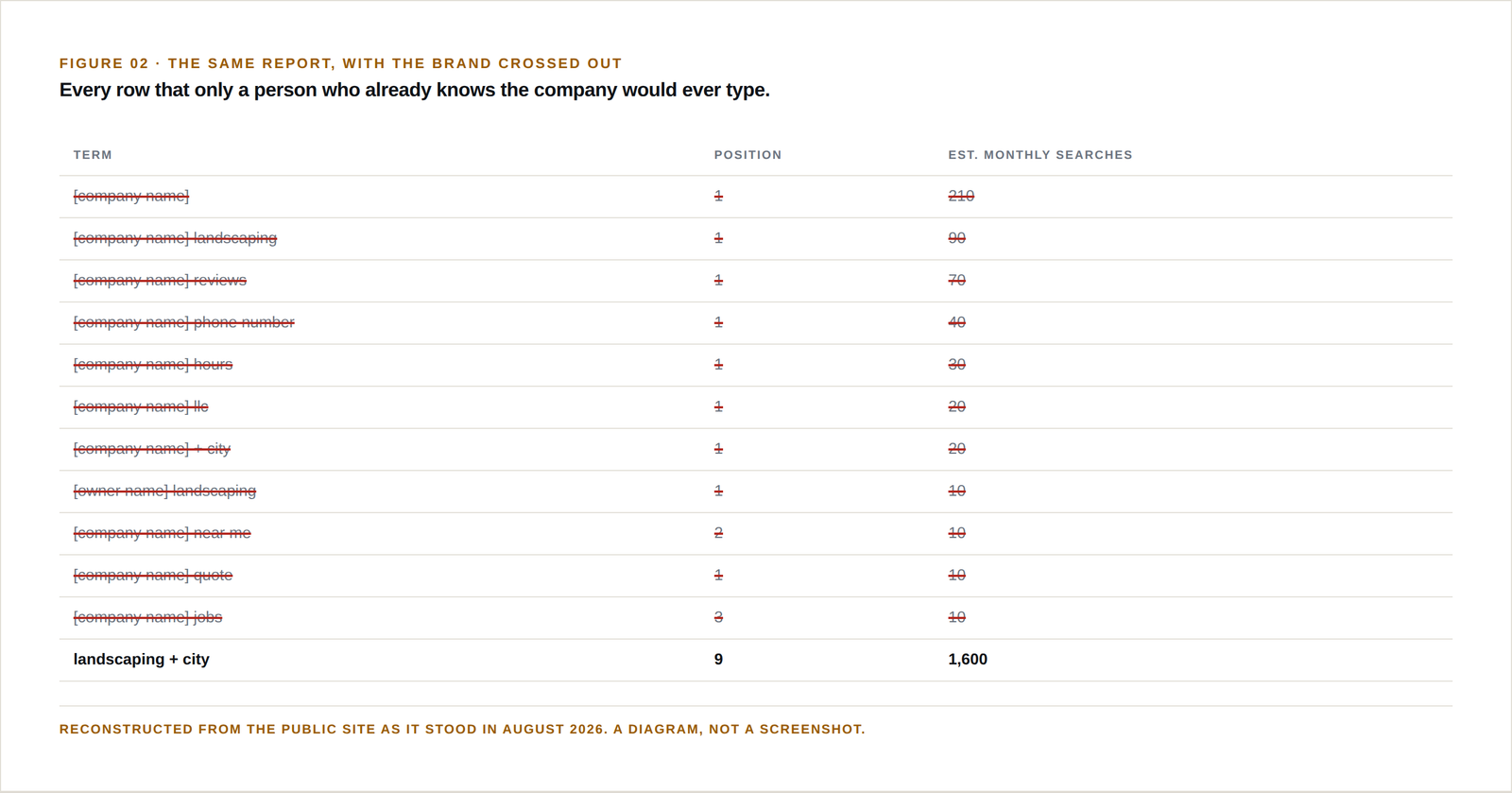
One row survived. One. Every other page-one ranking was some variation of people typing the company’s name into Google — past customers finding the phone number, referrals checking the reviews before they called. Useful traffic, worth protecting, and not remotely the same thing as being found by strangers who need a landscaper.
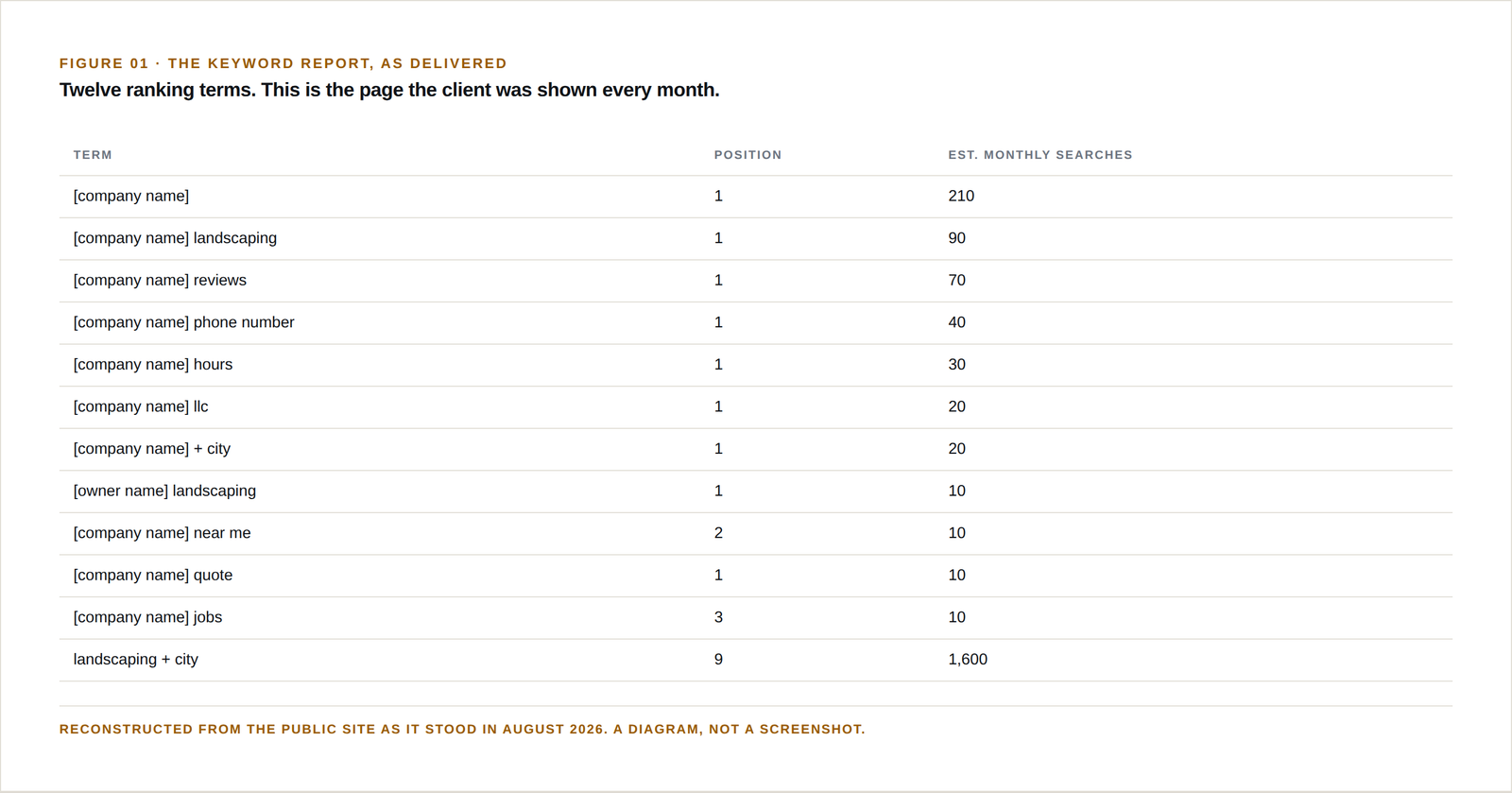
Brand traffic is comfortable to report because it’s dependable. It grows a little every year as the business grows, which makes every chart slope gently upward, which makes every monthly meeting pleasant. But it’s traffic the business generated offline — with good work, yard signs and twenty years of referrals — being counted as if the website earned it. The website was taking credit for the trucks.
Why it happened
The cause was structural, not mysterious. The entire site was five pages. Every service the company actually sells — landscape design, hardscaping, irrigation, seasonal maintenance — was crammed into two paragraphs on the homepage. There was no page for any service anyone searches for, no page for any of the dozen suburbs the trucks visit weekly, and the blog’s last three posts were photos from the company picnic.
Google ranks pages. It cannot rank pages that don’t exist. In their metro, the non-brand searches this company is invisible for — “landscape design [city],” “paver patio installation,” “irrigation repair near me” — add up to thousands of high-intent searches a month, currently split between two competitors with worse reviews and half the portfolio. The demand is real, mapped, and going entirely to other people.
None of this makes the web company villains. They were hired years ago to “build a website,” they built one, and they’ve kept it online ever since. Nobody ever changed the assignment to “bring in customers who’ve never heard of us.” That’s a different job, with different deliverables — and it starts with pages that give Google something to rank.
What I’d fix first
- A real page for each core service, built around how customers actually search, with project photos and honest pricing context on the page.
- Location pages for the suburbs the trucks already visit. The business is there every week; the website should be too.
- Rebuild the Google Business Profile around services, not just the name — categories, photos and reviews mapped to what they sell.
- Retire the picnic-photo blog in favor of project showcases, each targeting one real search.
What I would tell you to check
- Take your own keyword report and cross out every term containing your name. What’s left is your actual search marketing.
- Count your pages, then count your services. If the first number isn’t comfortably bigger than the second, you’re invisible for most of what you sell.
- Search “[your best service] [your city]” in an incognito window. If you’re not there, that’s where the next customer went.
- Ask your web company what percentage of your organic traffic is brand. If they don’t know, the report you’re paying for is decorative.
Want this pointed at your site?
The audit finds exactly this kind of thing — the leak everyone walked past because nothing looked broken. Twenty-seven checkpoints, your data, plain English.
Start the Audit