Call types
Not every phone call is the same job.
When I say home services SEO, most owners picture one thing: ranking for “plumber near me.” But your revenue doesn’t arrive as one kind of call — it arrives as three, and they behave nothing alike. Emergency work decides in minutes and pays you for being findable and answerable. Replacement work — the new water heater, the re-roof, the panel upgrade — decides over days of comparison shopping, and pays you for having the page that answers the homeowner’s real questions before your competitor does. Maintenance work decides seasonally and pays whoever showed up before the season did.
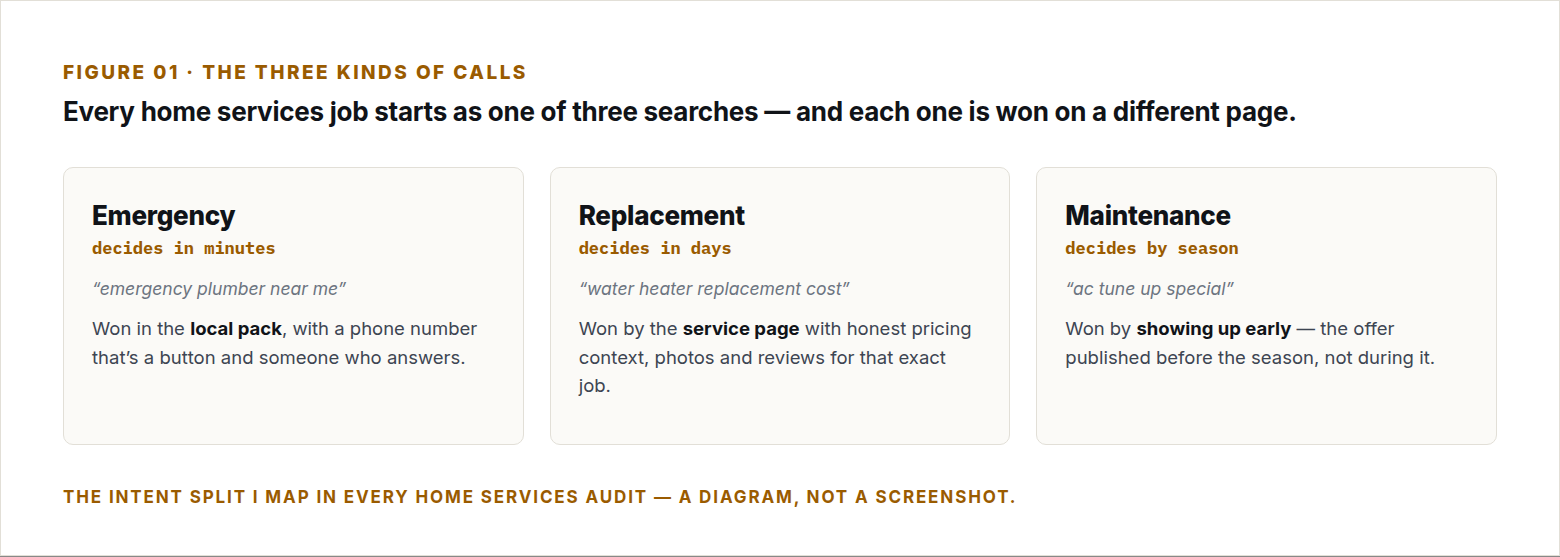
This split is the first thing I map in a home services audit, because it changes what you build. A site optimized only for emergencies leaves the fat replacement jobs to whoever wrote the honest “what a water heater costs in 2026” page. A site optimized only for browsing leaves the 2 a.m. calls to whoever answers. The audit tells you which of the three you’re currently losing — in most audits it’s two of three.
What happens next
The first 90 days, in priority order.
Owners always ask what the work actually looks like after the audit, so here it is. Nothing below is exotic — the leverage is in the order. Measurement comes before anything else, because until calls are tracked, every other decision is a guess. The Business Profile and the two worst leaks come next, because they pay back in weeks. Service pages ship suburb by suburb after that — and the review ritual starts on day one of the first job, because prominence compounds and can’t be rushed later.
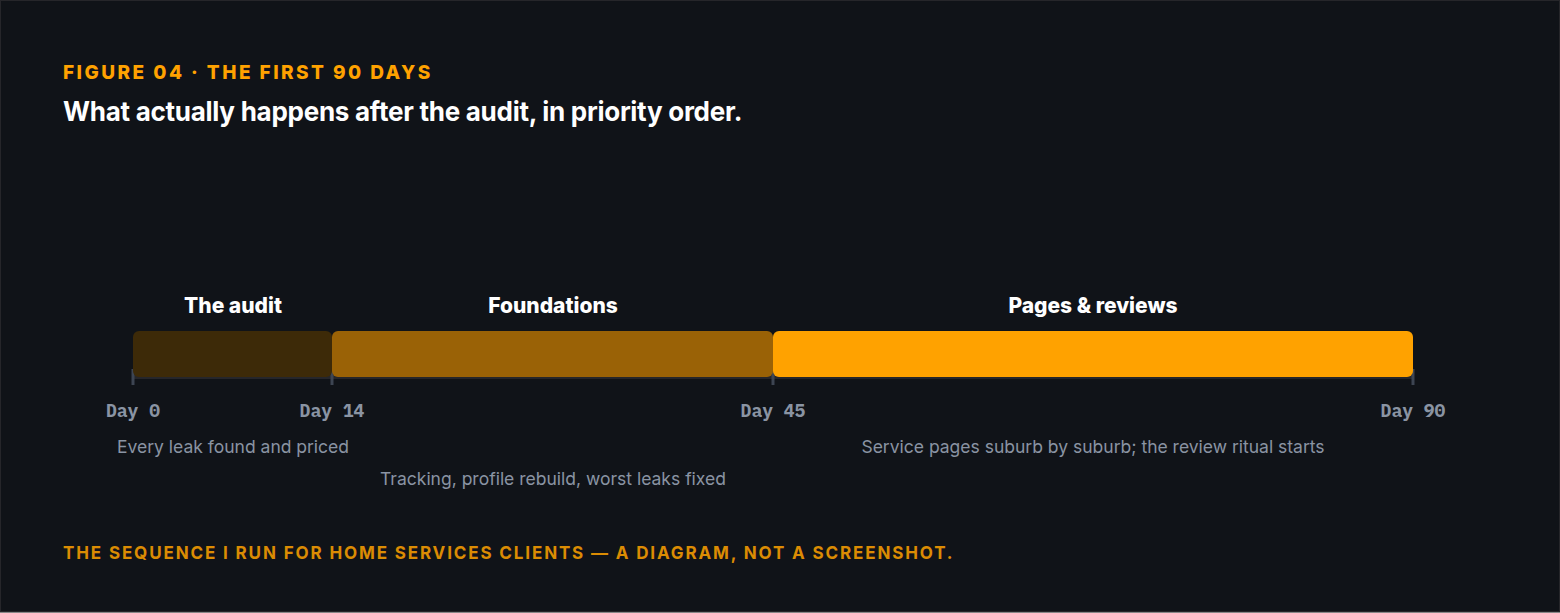
By day 90 you have tracking that ties rankings to booked jobs, a Business Profile that’s working instead of coasting, and the first service pages earning their spots. What you do next — keep building with me or run the plan yourself — is genuinely your call, because everything above is yours to keep. That’s the point of starting with the Revenue Audit instead of a retainer.
Rented vs. earned
Every rented lead is shared with three competitors.
When I said you’re renting leads you might be able to earn, here’s the arithmetic behind it. Aggregators and lead services charge per lead, forever, at a price that rises with competition — and the same homeowner is sold to two or three of your competitors at the same time, so you’re also paying for a race. The day you stop paying, the leads stop. You’re not building anything; you’re subletting someone else’s rankings.
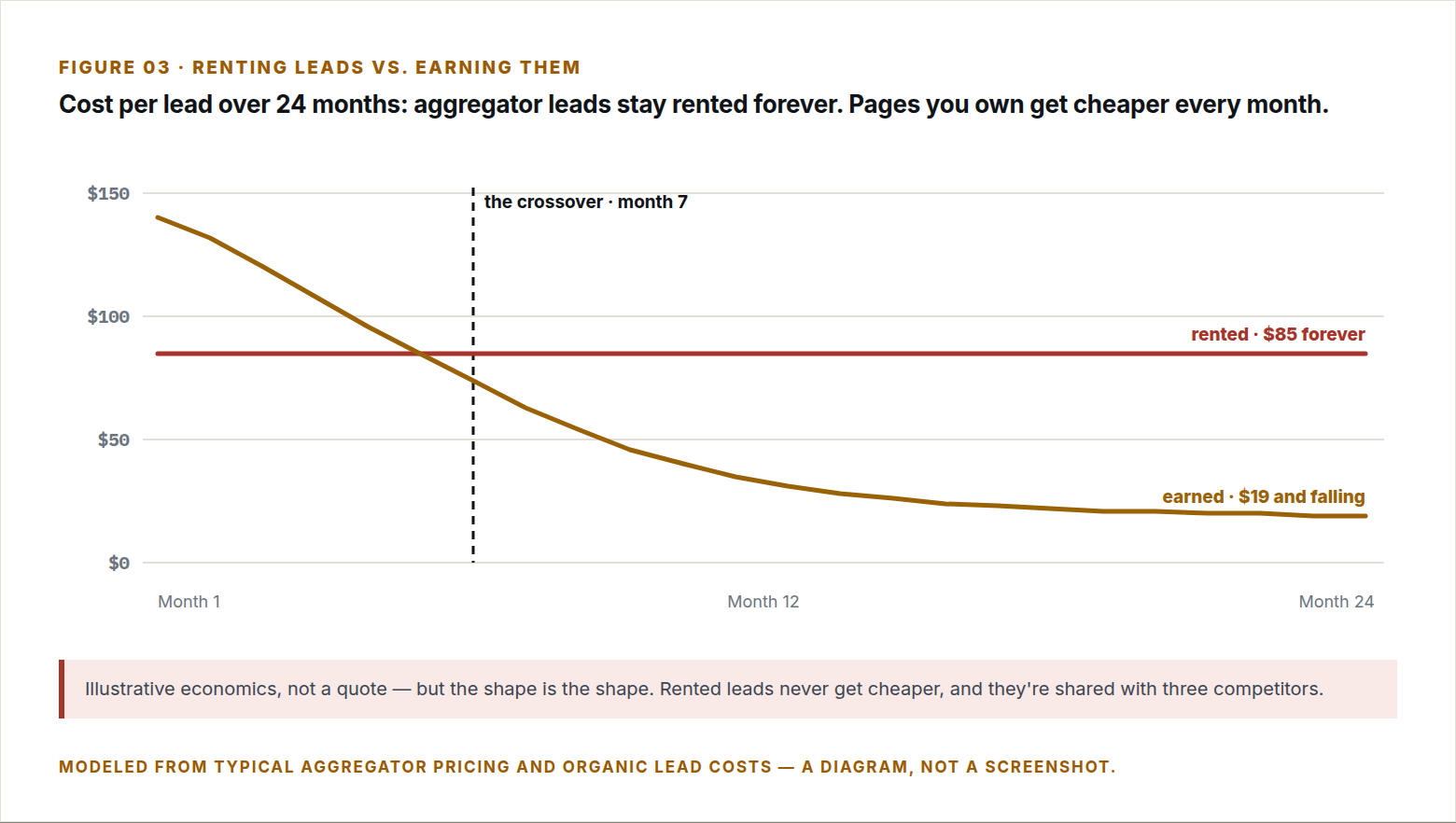
I’m not religious about this — rented leads have a place, especially while your own pages climb. What I object to is renting instead of building, for years, in a market where the searches already exist with your name nowhere on them. The audit prices both sides for your market: what you’re paying per booked job today, and what the same job would cost from a ranking you own. The crossover usually lands earlier than owners expect.
The calendar
Demand has a calendar. Your website should too.
Every home services trade has a season, and every owner knows theirs by heart — the July compressor rush, the first-freeze week, the spring roofing surge after storm season. What almost nobody does is run the website on that calendar. The tune-up offer goes up the week the phones are already ringing. The “furnace not igniting” page gets written in January, three months after it should have started ranking.
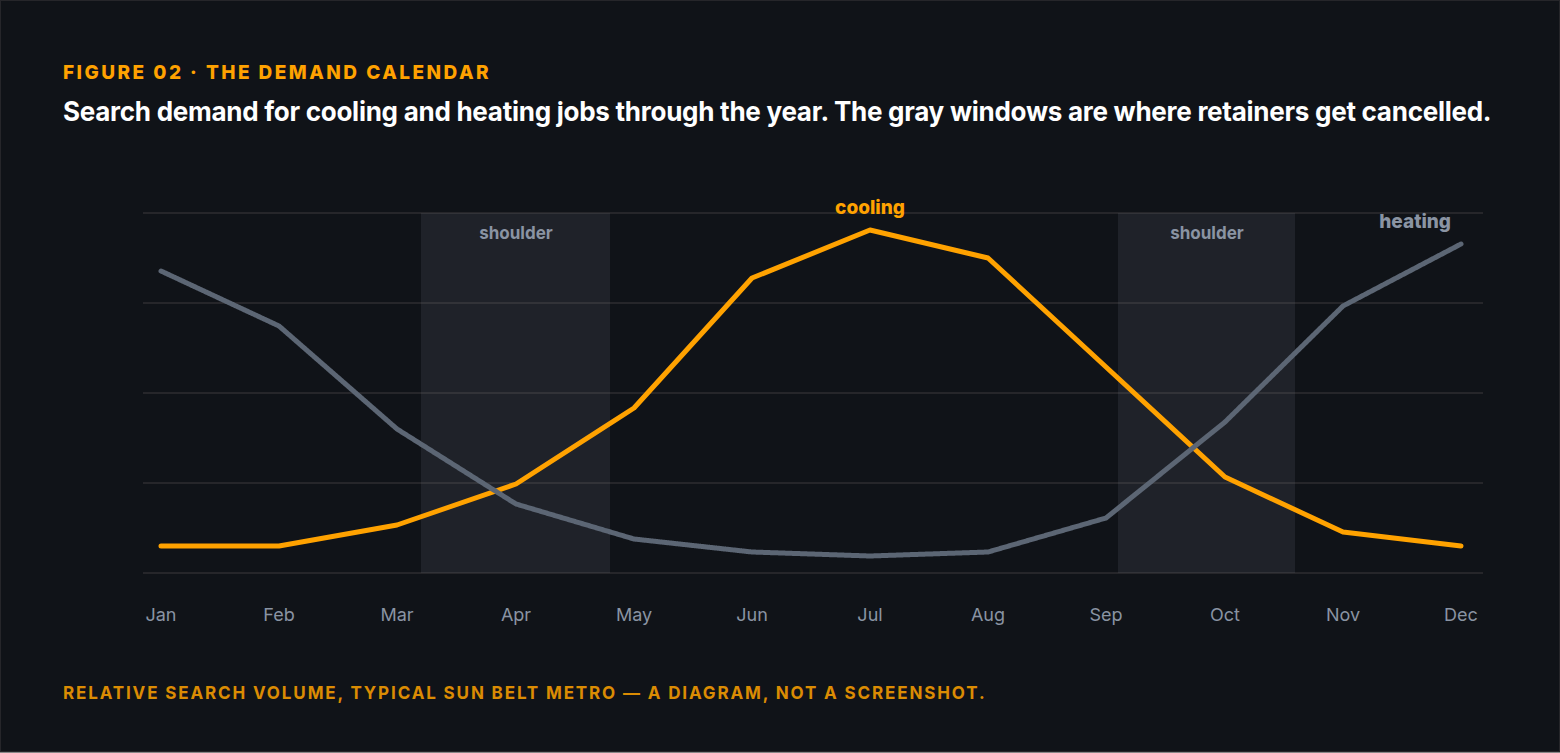
Pages rank on a lag. Google has to find a new page, crawl it, and watch it earn engagement before it ranks — which takes weeks you don’t have once the season starts. The contractors who own the July results published in April. The shoulder months everyone dreads are not the off-season; they’re the publishing season, and they’re also when maintenance-plan content converts the customers who smooth your revenue out for the rest of the year.