Home services · multi-location HVAC
They were optimizing for the 30% of conversions that didn’t matter.
Six locations. Every report counted form fills. Ninety percent of their booked jobs started with a phone call nobody was measuring.
Read this first
An anonymized engagement.The sector, the numbers and the sequence of events are real and come from the client’s own systems — identifying details have been changed enough that you could not find them, and they signed off on the rest.
The complaint
The owner of a six-location HVAC group called me with a complaint I hear more often than any other, phrased better than most: “If the numbers keep going up, why doesn’t it feel like the phones are busier?”
He wasn’t being difficult. His agency’s monthly reports were legitimately good — rankings up, traffic up, conversions up, month after month, for two years. The dashboards were green. And the dispatch board, the thing that actually pays for the trucks, looked exactly the way it had looked two years earlier. Someone was wrong, and it wasn’t the dispatch board.
Where the numbers came from
The reports counted one thing: form fills. That’s not a scandal — it’s the default. Forms are easy to track, calls are annoying to track, and so forms quietly become “conversions” and calls become weather. Every decision this company had made for two years — which pages got attention, which locations got budget, which campaigns got called winners — had been made on form-fill data.
So the first thing I did had nothing to do with SEO. I pulled ninety days of booking records out of their dispatch software and matched every booked job back to its first touch. Not leads. Not inquiries. Booked, revenue-producing jobs.
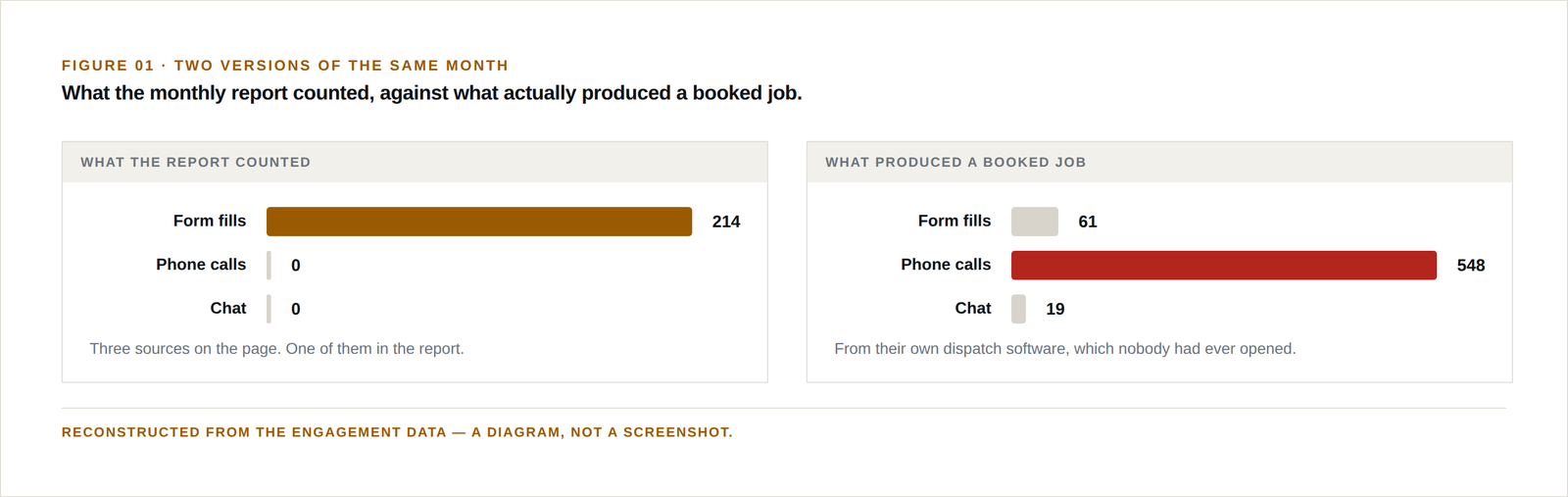
They weren’t doing SEO badly. They were doing it precisely — toward the 30% of conversions that didn’t matter.
What the mismeasurement had already cost
Here’s the part that should worry anyone who glances at a dashboard and moves on. In the previous year’s redesign, two service pages had been quietly demoted — folded into a combined page, dropped from the main navigation — because on paper they were the weakest pages on the site. Almost no form fills. Dead weight.
Matched against the dispatch data, those two pages were the highest call-producing pages in the company. People who landed on them didn’t fill out a form because they were standing next to a broken furnace; they called. The measurement hadn’t just missed the story. It had actively demoted the best-performing pages the business owned, and everyone involved had made a reasonable decision from the data in front of them.
The fix, and how boring it was
- Dynamic call tracking across all six locations — unique numbers per page and per campaign, with call outcomes flowing into the same dashboard as form fills, so a booked job counts the same no matter how it arrived.
- Reinstate the two demoted service pages, rebuilt on their own URLs and linked from every location page.
- Click-to-call above the fold on mobile — where, it turned out, most of this traffic had been arriving all along.
- Rewrite each location page around the services that make its phone ring, which the call data could now tell us, market by market.
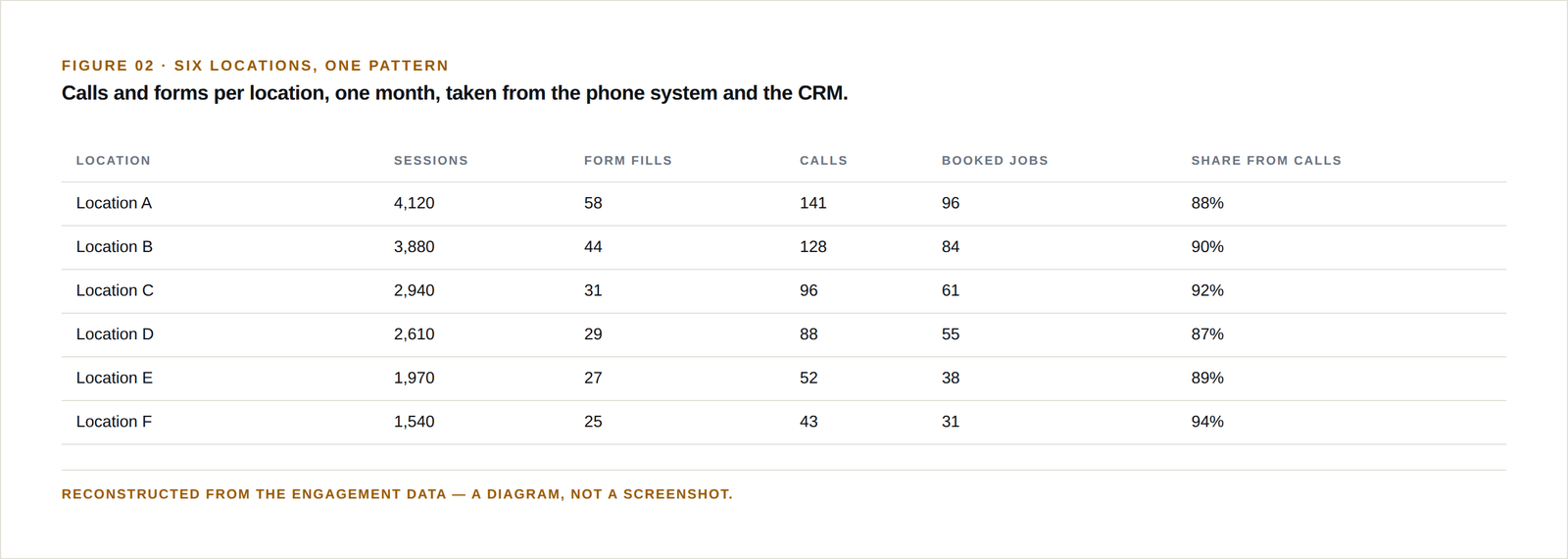
Within 120 days, booked jobs attributed to organic search were up 38% — with rankings that had barely moved. It was largely the same traffic. It was simply being counted, routed and converted properly for the first time.
Notice what isn’t on that fix list: no new content, no link building, no redesign, no migration. The most valuable SEO work of the entire engagement happened in the phone system and the analytics configuration. That’s typical. The expensive-looking problems are rare; the boring ones are everywhere, and they compound quietly for years until somebody finally runs the reconciliation between the dashboard and the bank account.
What I would tell you to check
- Ask what percentage of your booked revenue starts as a phone call. If the answer is a guess, that’s the finding.
- Open your analytics and your job-booking system side by side for the same month. If they tell different stories, believe the one that invoices.
- Find the last page that was demoted or deleted for “not converting.” Check what it was actually producing first.
- If your reports only count what’s easy to measure, assume every optimization made from them inherited the blind spot.
Want this pointed at your site?
The audit finds exactly this kind of thing — the leak everyone walked past because nothing looked broken. Twenty-seven checkpoints, your data, plain English.
Start the Audit