What clients type
Nobody searches for a “practice area.” They search scared.
Law firm websites are written in the language of law firms — practice areas, representation, zealous advocacy. The person who was rear-ended this morning is typing something else entirely: a question, usually a frightened one, about money, fault, insurance, and whether calling a lawyer will make things better or worse. Every one of those questions is a search. Every search is a page. Almost no firm has built them.
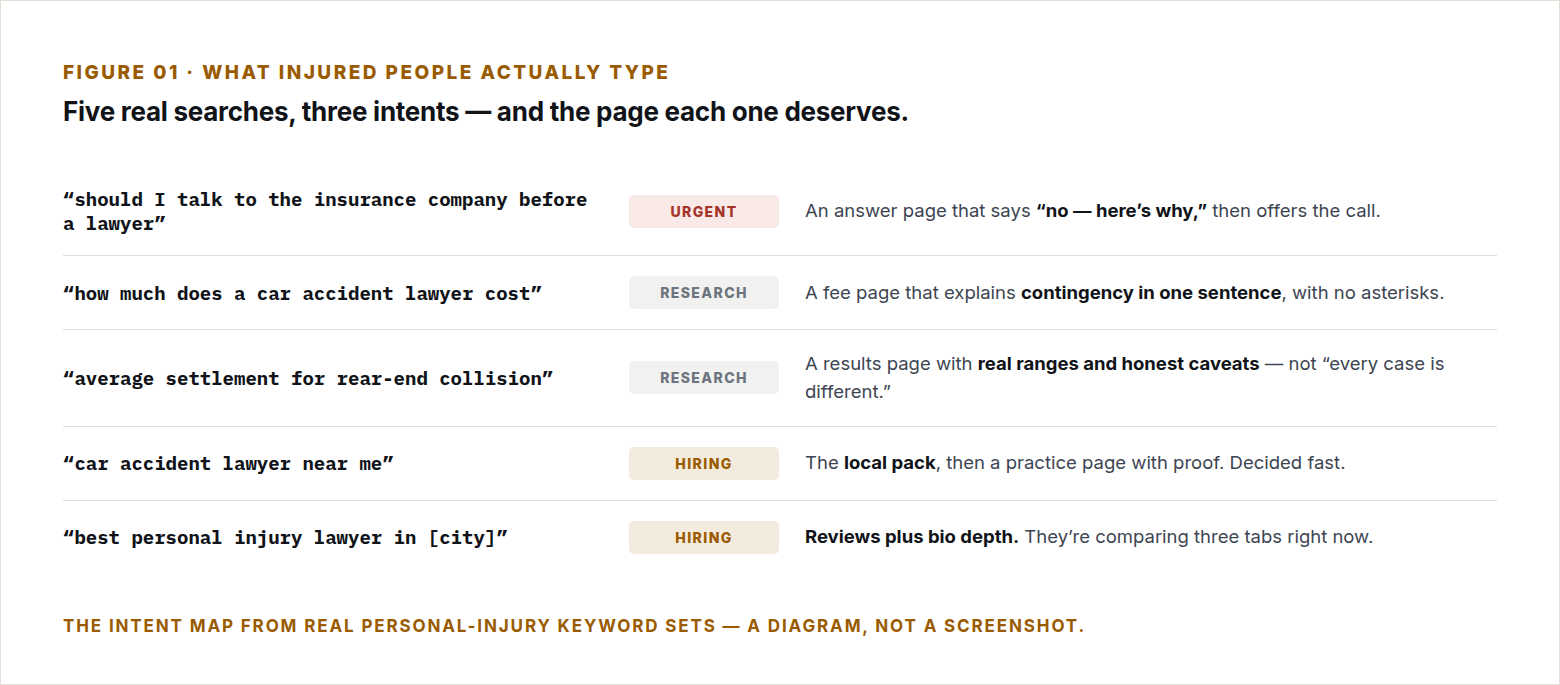
The uncomfortable one is the settlement question. Firms refuse to publish ranges — every case is different, the lawyers say, and it’s true — so the answer gets ceded to settlement-mill directories and AI summaries with no stake in accuracy. The firm willing to publish honest ranges with honest caveats doesn’t just win the ranking; it starts the relationship as the only one who gave a straight answer. In a profession sold on trust, that’s not a marketing trick. That’s the product, demonstrated early.
The bio pages
Your bios get the traffic. Your homepage gets the attention.
Pull up analytics for almost any firm and you’ll find the same quiet surprise: after the homepage, the attorney bios are the most-visited pages on the site — because referrals, opposing counsel, adjusters and clients-to-be all look up the human before they deal with the firm. And on most sites, that most-visited page is three sentences, a headshot, and a law school.
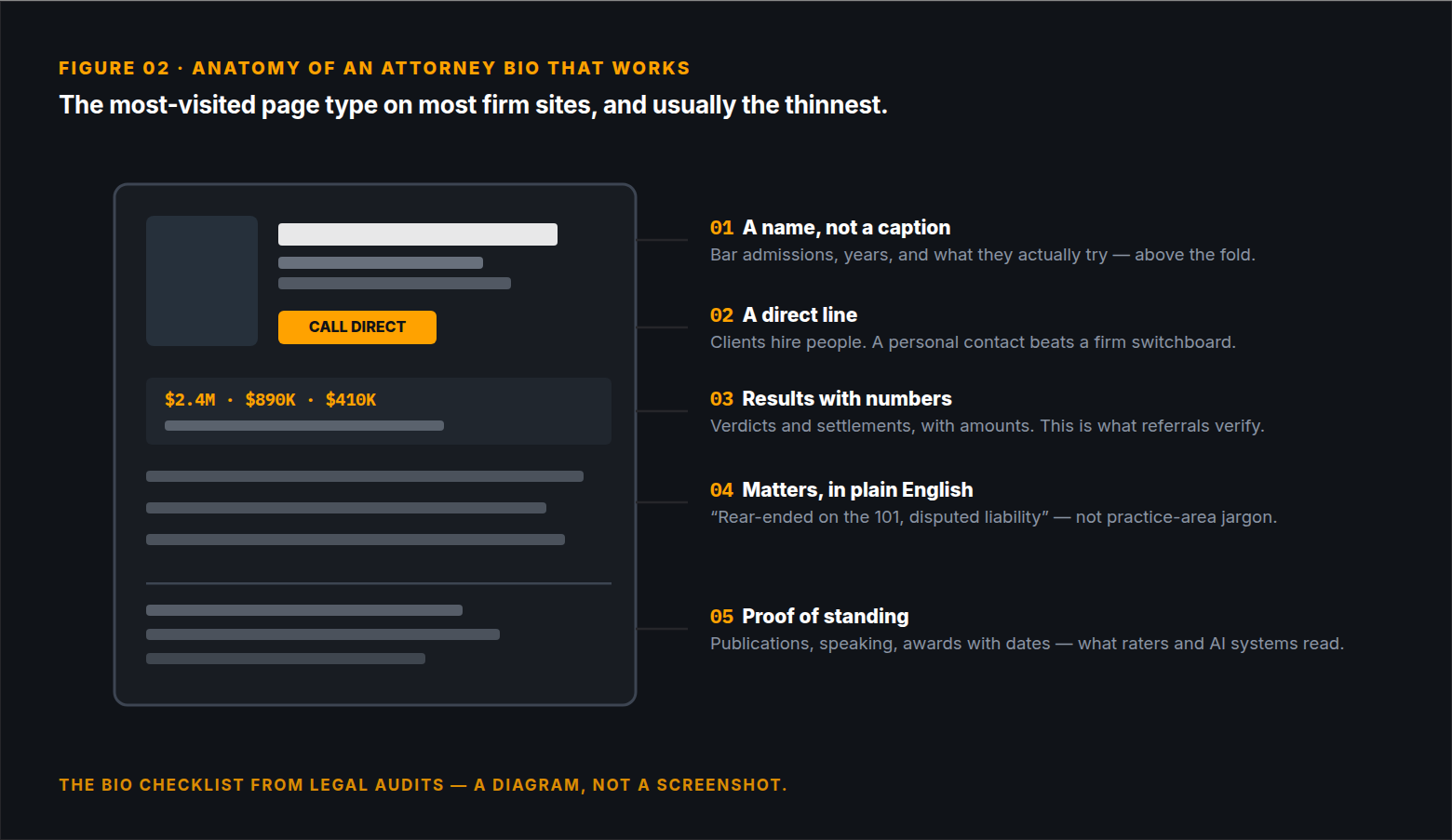
There’s a second audience reading these pages now. Google’s quality guidance leans hard on demonstrable expertise for legal content, and AI systems deciding which firm to name check the same things a skeptical referral does: real results, real matters, real standing. A deep bio is simultaneously a conversion page, an E-E-A-T signal, and the raw material every other page on the site borrows credibility from. It’s the highest-leverage writing a firm can commission, and it’s usually assigned to nobody.
The economics
One signed case pays for the year. That’s the whole business case.
Legal is the most expensive corner of search marketing — injury-related clicks routinely cost more than a hundred dollars each — and firms conclude from the sticker price that SEO is a luxury. The arithmetic says the opposite. What matters isn’t cost per click. It’s cost per signed case, and the channels differ wildly on that number — and on what happens to it over time.
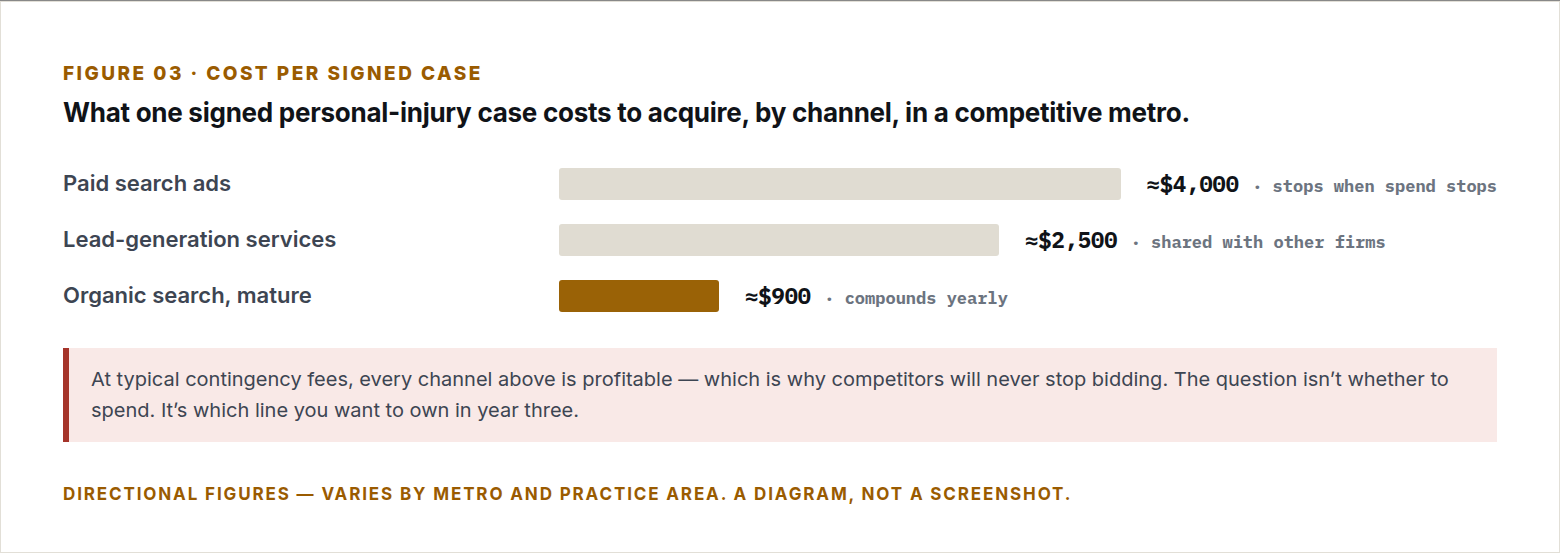
The honest version of this pitch includes the catch: organic’s $900 is a mature number. Year one costs more per case than ads do, which is exactly why most firms quit before the crossover and why the ones that didn’t now own page one in your metro. They aren’t better lawyers. They just started the compounding three years before you did — and every month of delay is a month added to the far end.
The page grid
Your market is a grid. Most firms have filled in one square.
Here’s the structural reason firms stall at “we rank okay in our city”: rankings happen practice by practice, city by city. The motorcycle-accident searcher in Mesa and the slip-and-fall searcher in Chandler are different page-ones, and a single “Personal Injury” page pointed at the whole metro competes in none of them convincingly.
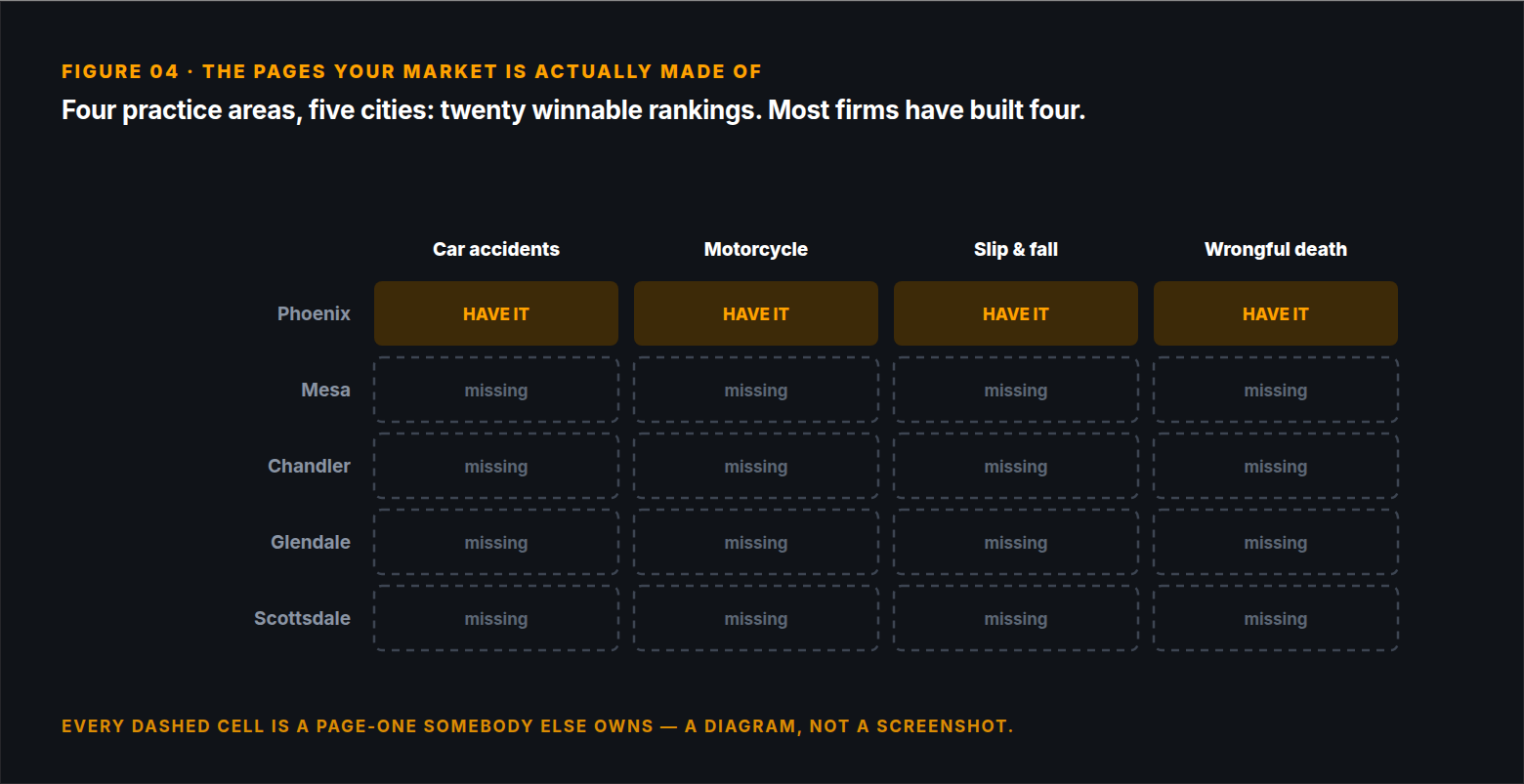
Filling the grid isn’t twenty copies of one page with the city name swapped — Google discards those, and so do readers. Each cell earns its spot with local specifics: the intersections, the courts, the carriers, results from cases like the ones that happen there. It’s unglamorous work, which is why the grid is usually empty and why it’s winnable. I’ve written about what firms lose after the click in my intake teardown — the Revenue Audit maps your grid, your intake, and what each empty cell is worth in signed cases.