How these are done
Outside-in, and honest about it.
A teardown is not an audit. An audit gets read-only access to analytics, call data, and revenue; a teardown gets what you get — a browser, a search box, and the patience to actually go through the site like a customer with money. That constraint is the point. Everything found in a teardown was sitting in public the whole time, visible to every prospect who bounced and every competitor who looked.
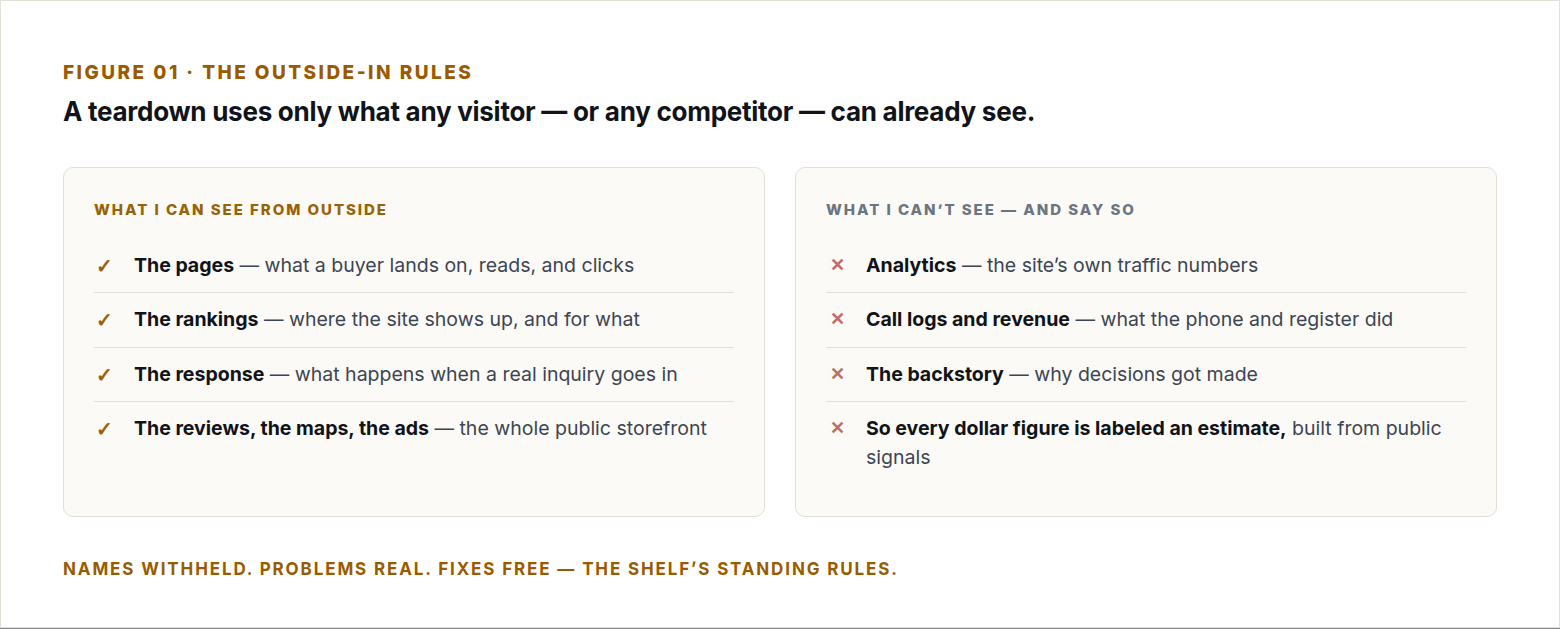
The names stay out for a simple reason: the goal is never to embarrass a business — it’s to teach from one. Every teardown subject has thousands of twins. The odds that some version of these pages describes your website are, honestly, pretty good — that’s why they get written.
The shelf
Three teardowns, free to steal from.
Each one follows the same route: what the business looks like from the outside, where a real buyer’s journey breaks, what that break costs per month at conservative estimates — and the fix, spelled out plainly enough that the owner could hand it to their web person tomorrow.
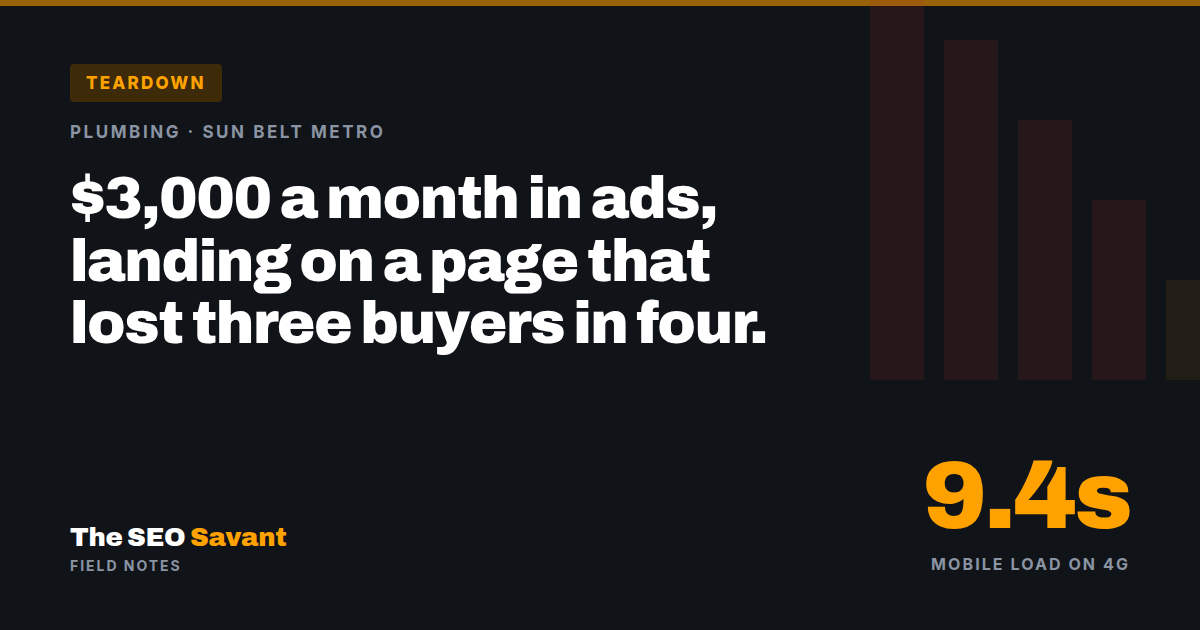
$3,000 a month in ads, landing on a page that lost three buyers in four.
A plumbing company paying real money for clicks that arrived on a page with no prices, no proof, and a phone number below the fold. The ads worked. The landing page was the leak — and fixing it cost nothing monthly.
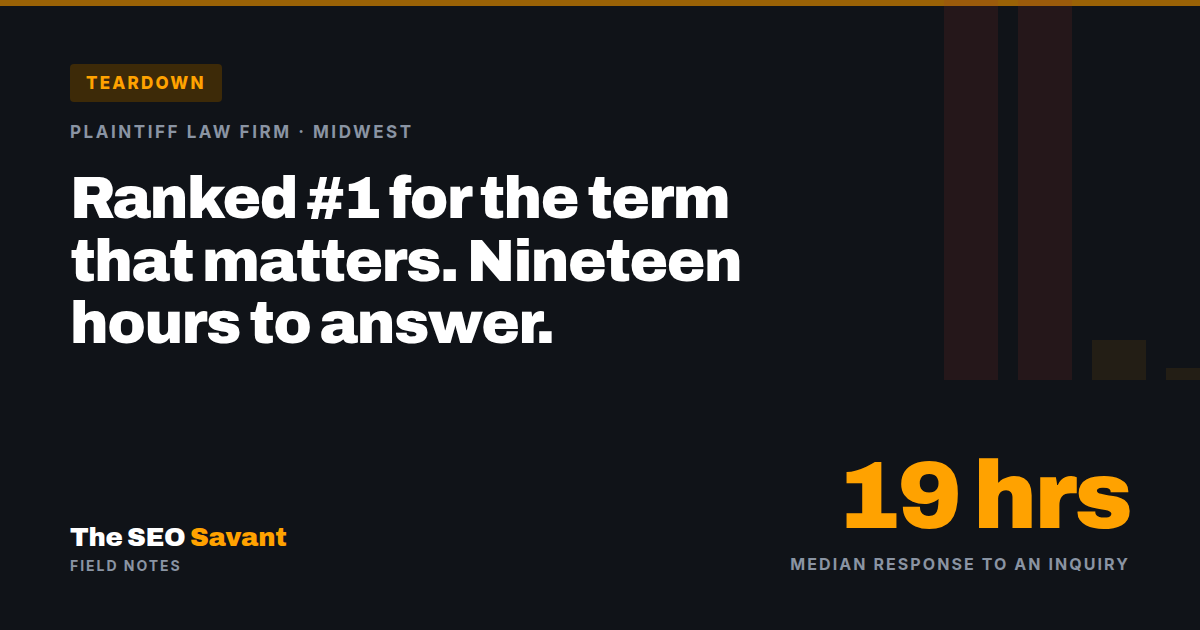
Ranked #1 for the term that matters. Nineteen hours to answer an inquiry.
A law firm that won the expensive part — the ranking — and lost the free part: answering. In a market where claimants hire the first firm that responds, the intake desk was quietly refunding the entire SEO investment.
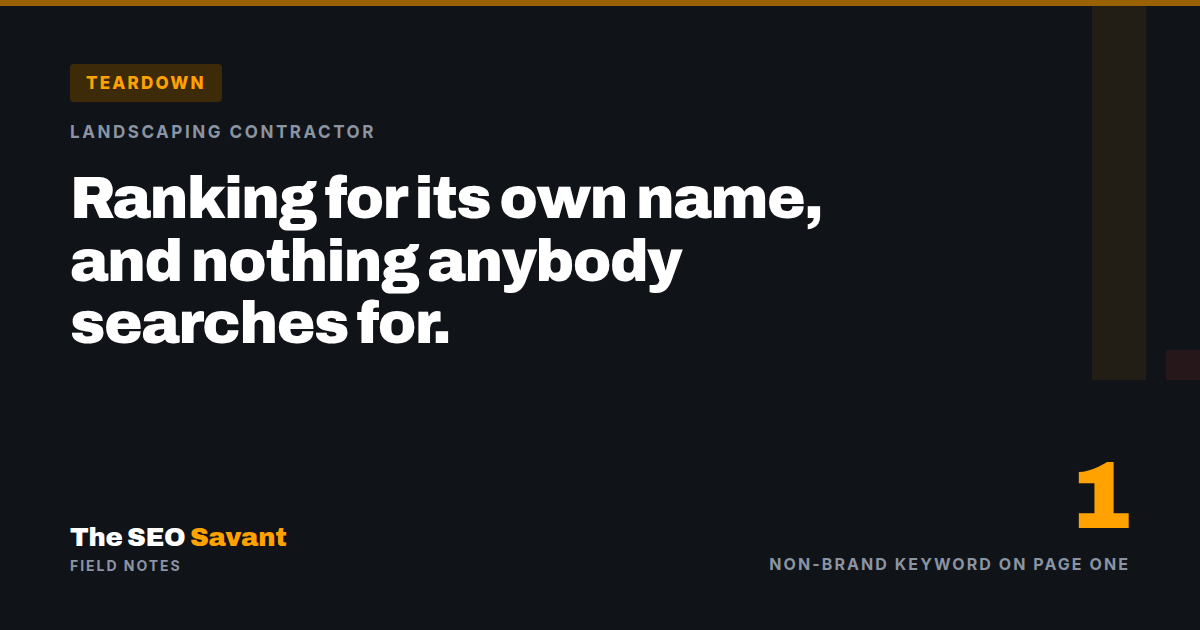
Ranking for its own name — and nothing anybody searches for.
A landscaping company celebrating #1 rankings that were all brand searches — people who already knew them. For “landscaper near me” and every phrase a stranger types, they didn’t exist. A visibility problem wearing a victory lap.
The obvious question
Why give the diagnosis away?
Because a teardown is the only sales pitch I’m comfortable making. Anyone can claim thirty years of pattern recognition; a teardown shows the pattern recognition working, on a real website, where you can check every observation yourself with your own browser. If the thinking is good, you’ll know. If it’s not, you’ll know that too — better now than two weeks into an engagement.
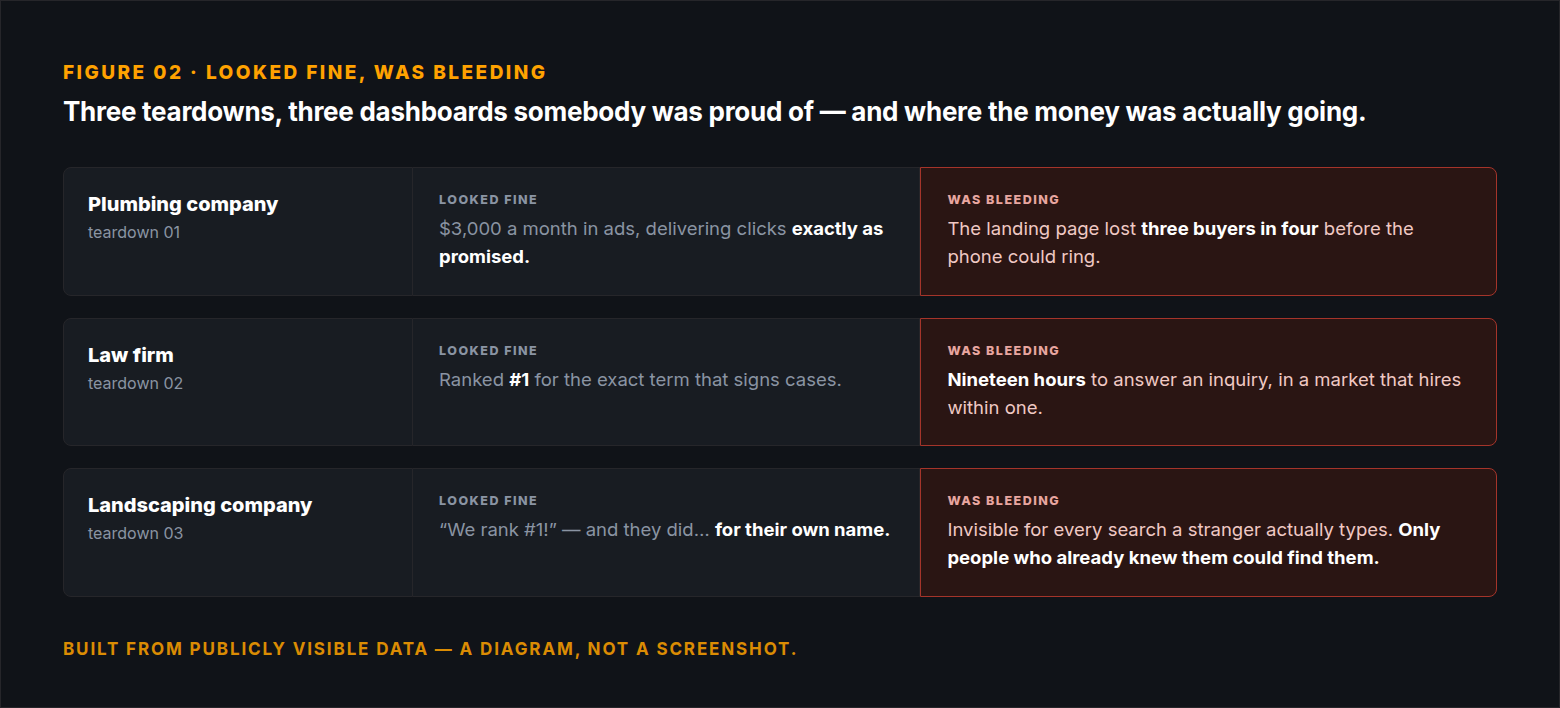
Notice what the three leaks have in common: not one of them was a rankings problem that more SEO spending would have fixed. A landing page, an intake desk, a keyword strategy pointed at the mirror. This is the shape of most of what I find in paid work too — which is why the case studies read like these teardowns with the numbers filled in.